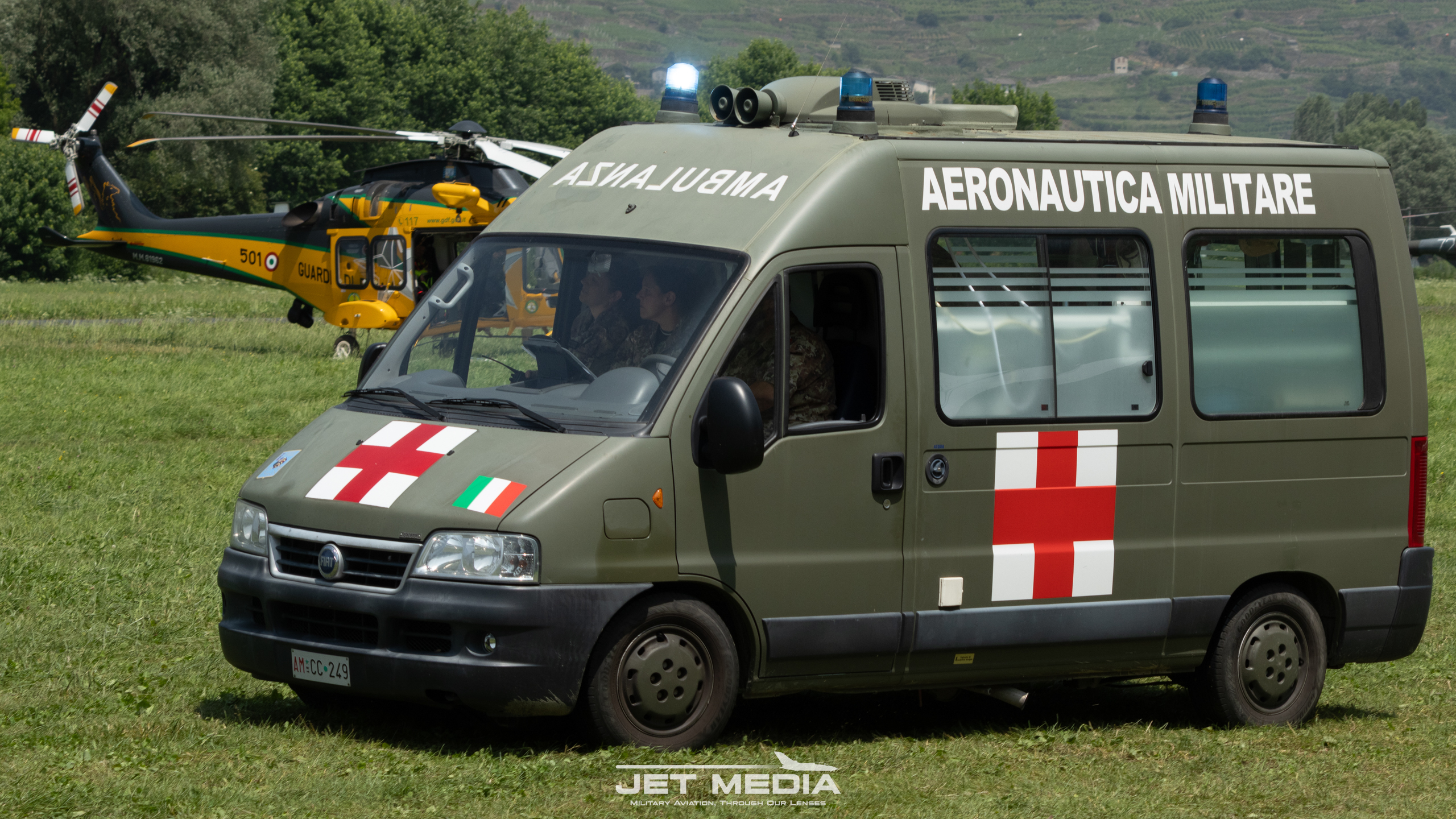
Grifone is the main national search and rescue (SAR) exercise held in Italy, and one of the few in which helicopters from the armed forces, the police corps and foreign air forces train together on the same missions. Run every year by the Italian Air Force with the support of the CNSAS, the National Alpine and Speleological Rescue Corps, it exists for a simple reason: the people who may one day have to work together in a real emergency should already have done so, using the same procedures.
In 2025 the exercise took place in the Valtellina, in northern Italy, between June 9th and June 13th, and was based at the small airfield of Caiolo, near Sondrio, where the operations base was also located. The setting could hardly have been more demanding: narrow valleys, high mountains and weather that can change within minutes.
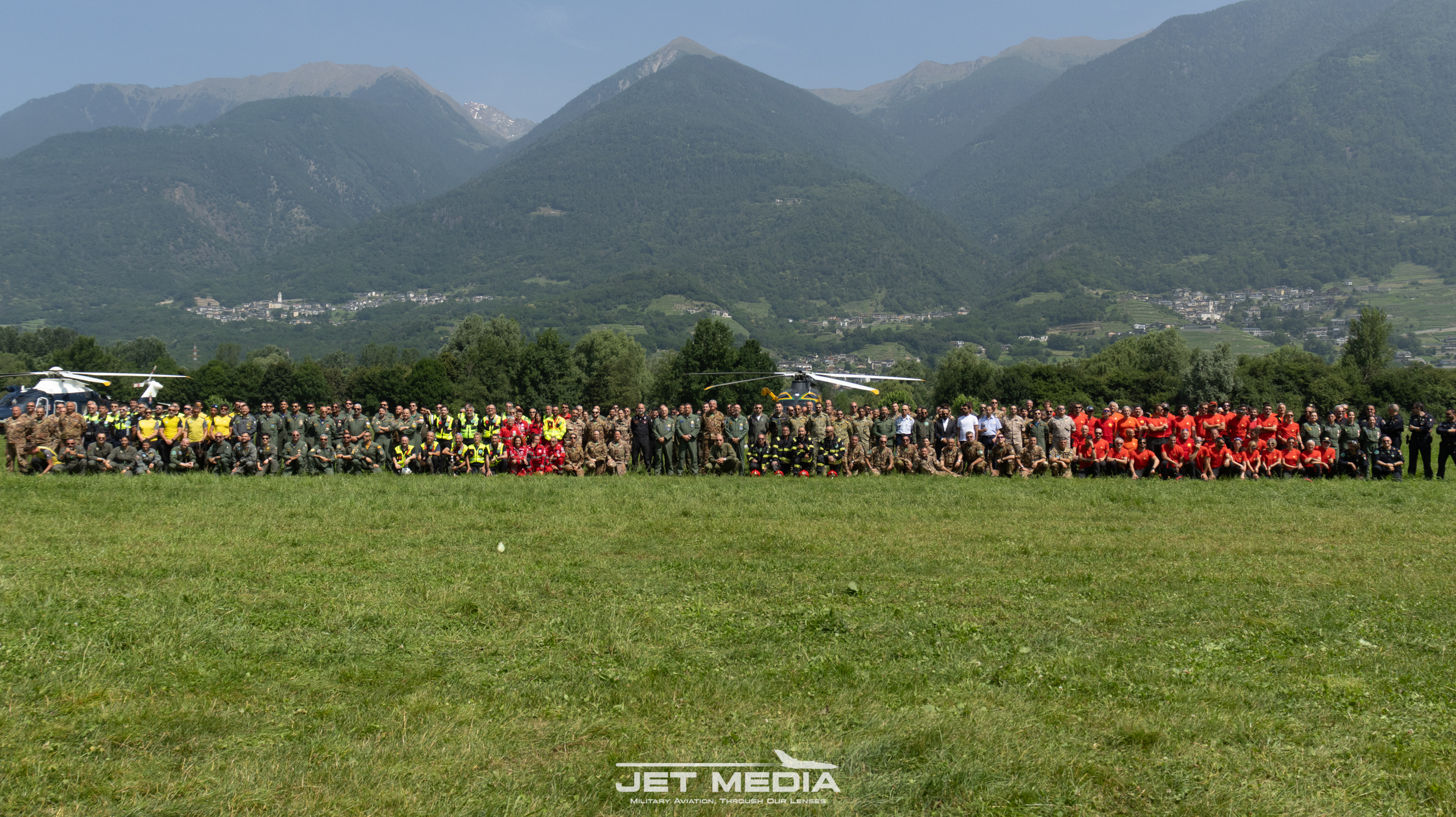
Over the five days of the exercise, the various crews faced a wide variety of missions, flying more than 80 sorties for a total of 48 hours of flight time. Around 500 people took part, from the Italian Air Force and the CNSAS to the other institutions involved, while the Caiolo airfield was turned into a forward operating base for helicopters, rescuers and support personnel.
To put the numbers in perspective, the 2022 edition, held in the Apennines near Piacenza, involved 13 aircraft and about 450 people, with 46 training missions and 44 flight hours. The 2025 edition was bigger and busier, and it moved the exercise into the Alps.
The scenarios were built to be as realistic as possible. In one of the missions the personnel of the Soccorso Alpino had to find and recover a mannequin, and the mission did not end until the mannequin had been located and successfully brought back, exactly as it would in a real rescue.
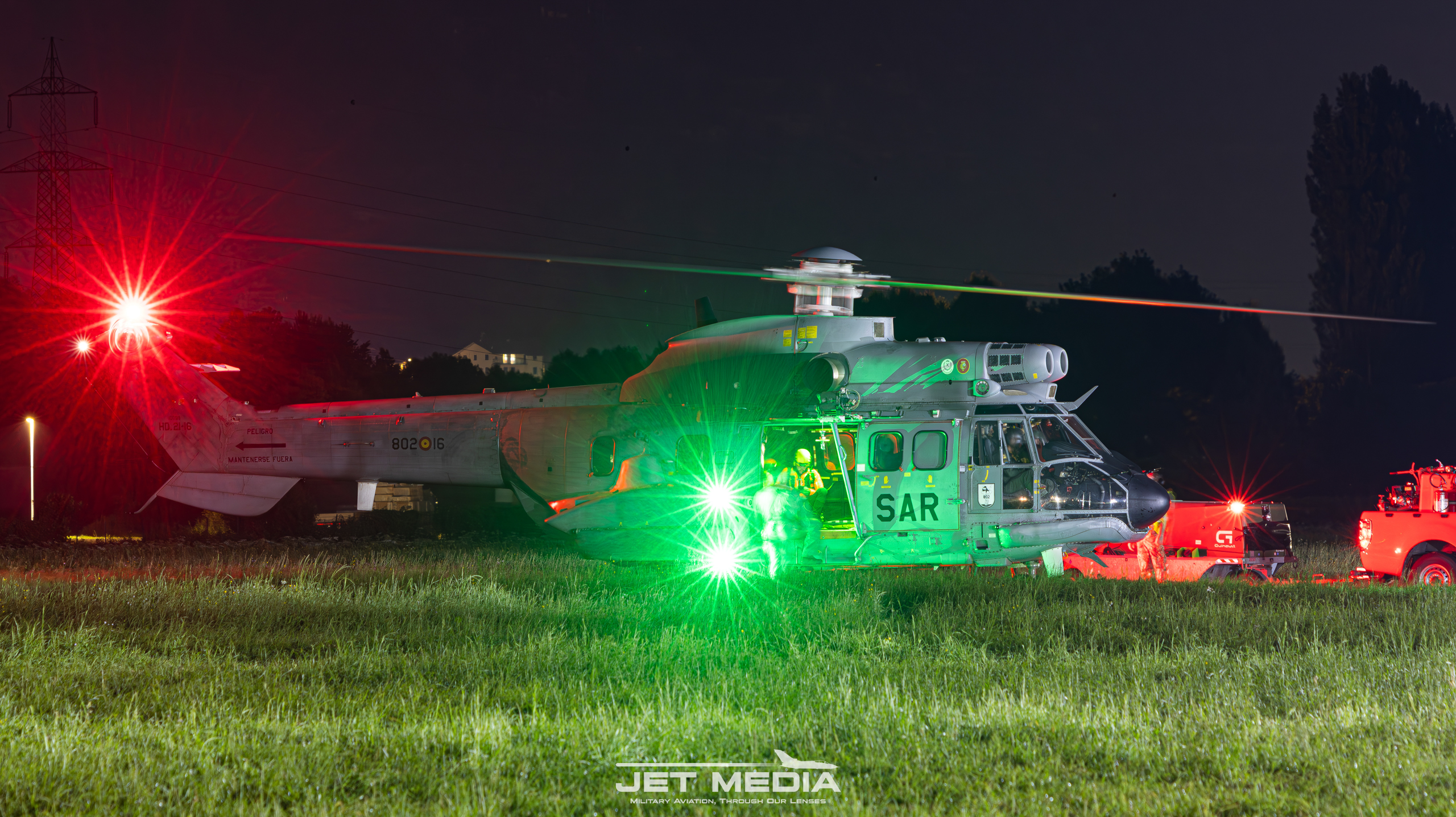
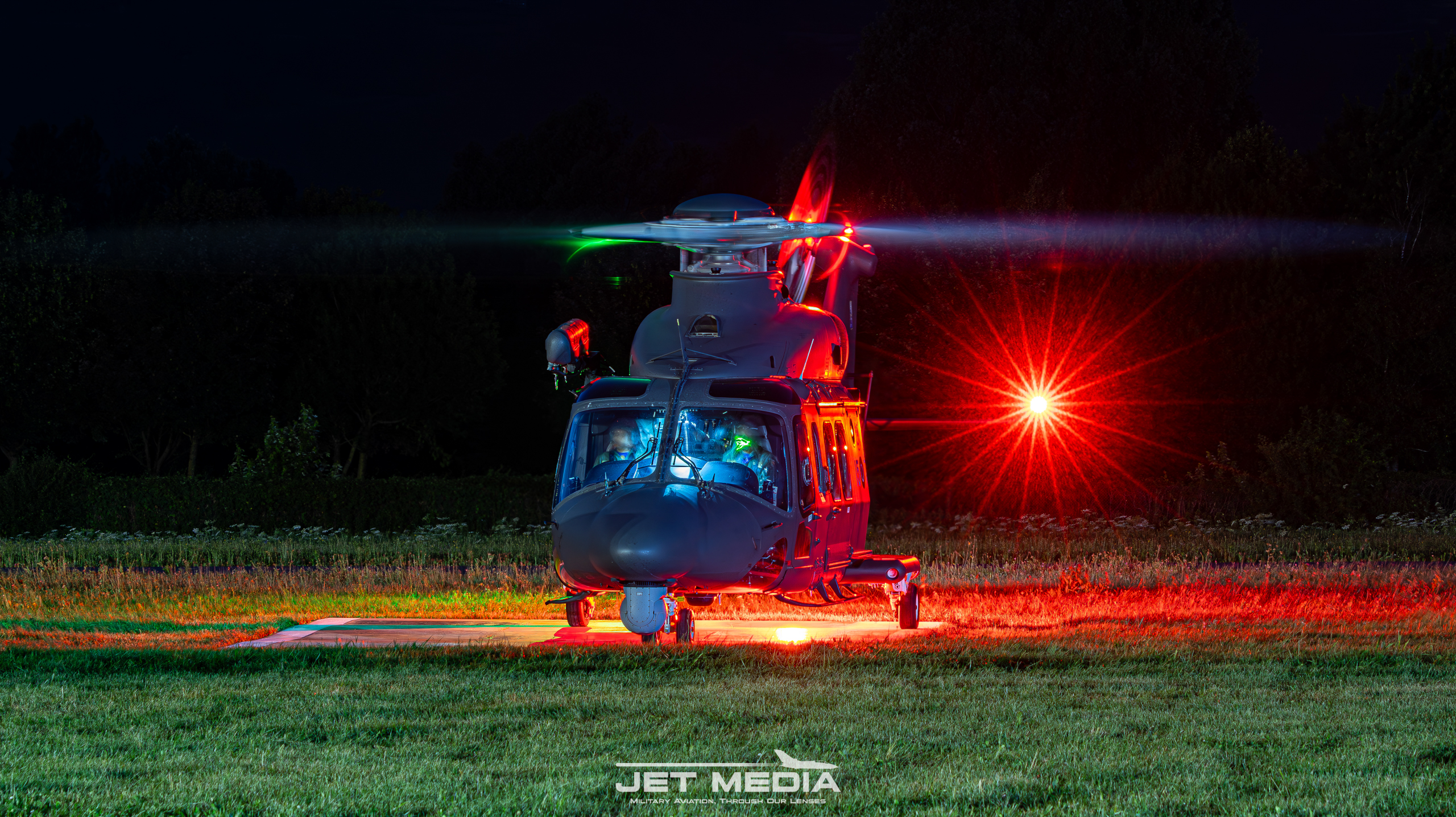
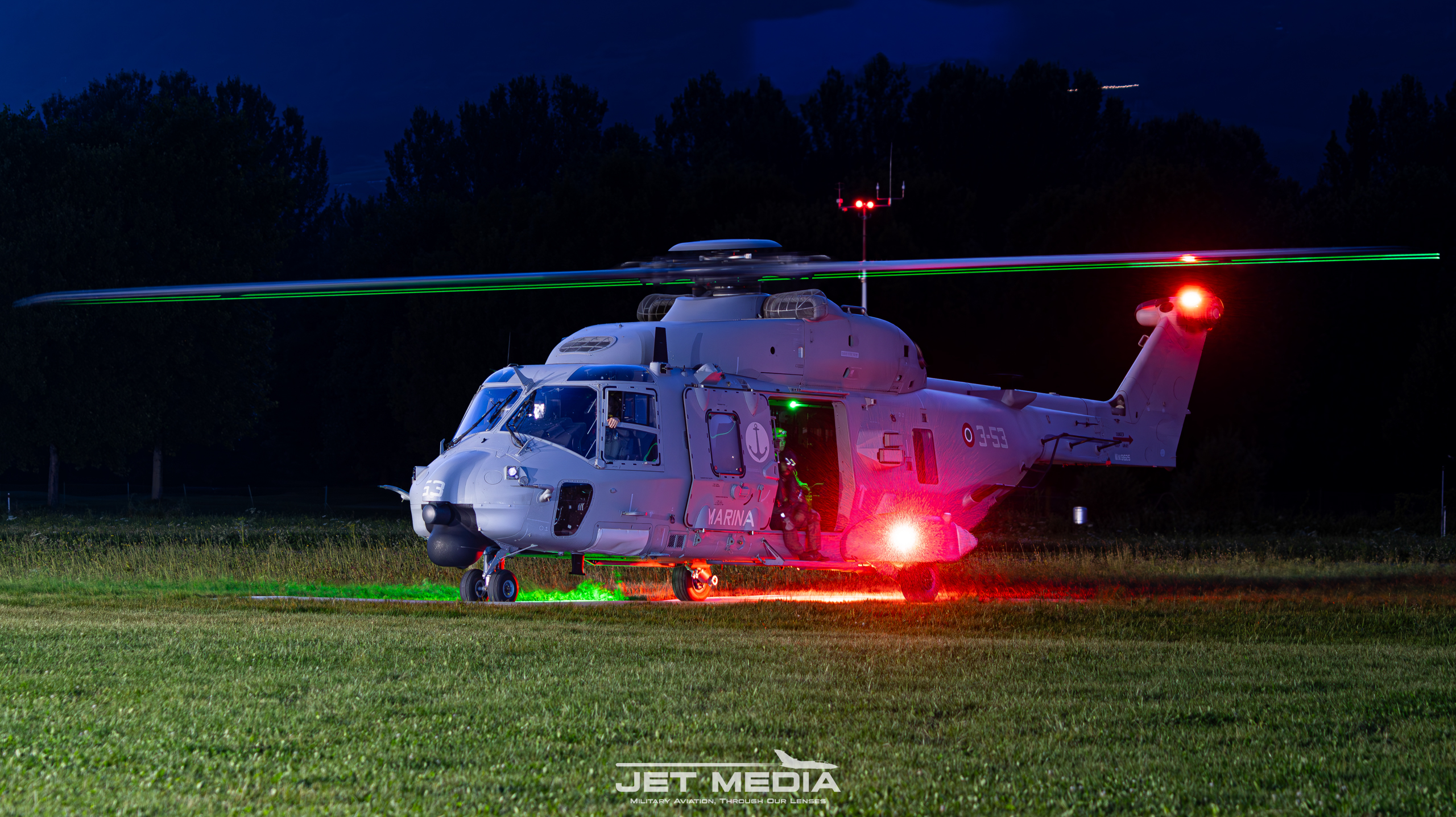
As daylight faded over the airfield, the lights were switched on to allow the Air Force, the Navy and the other units to carry out night operations in the high mountains, which continued until around midnight. Flying close to the terrain at night, with hoist operations and limited visibility, is one of the hardest things a SAR crew can be asked to do, and exactly the kind of mission that has to be rehearsed before it happens for real.
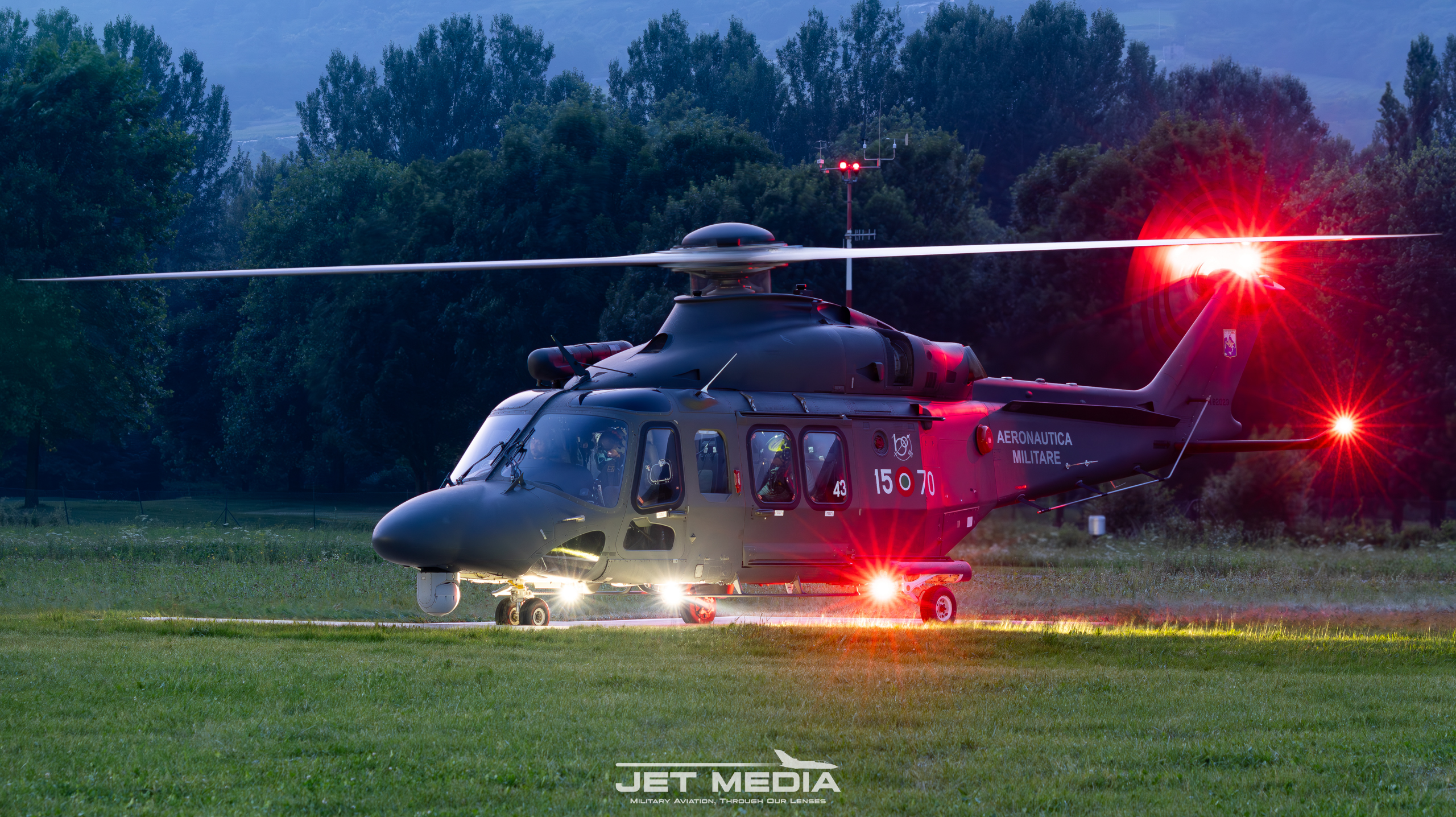
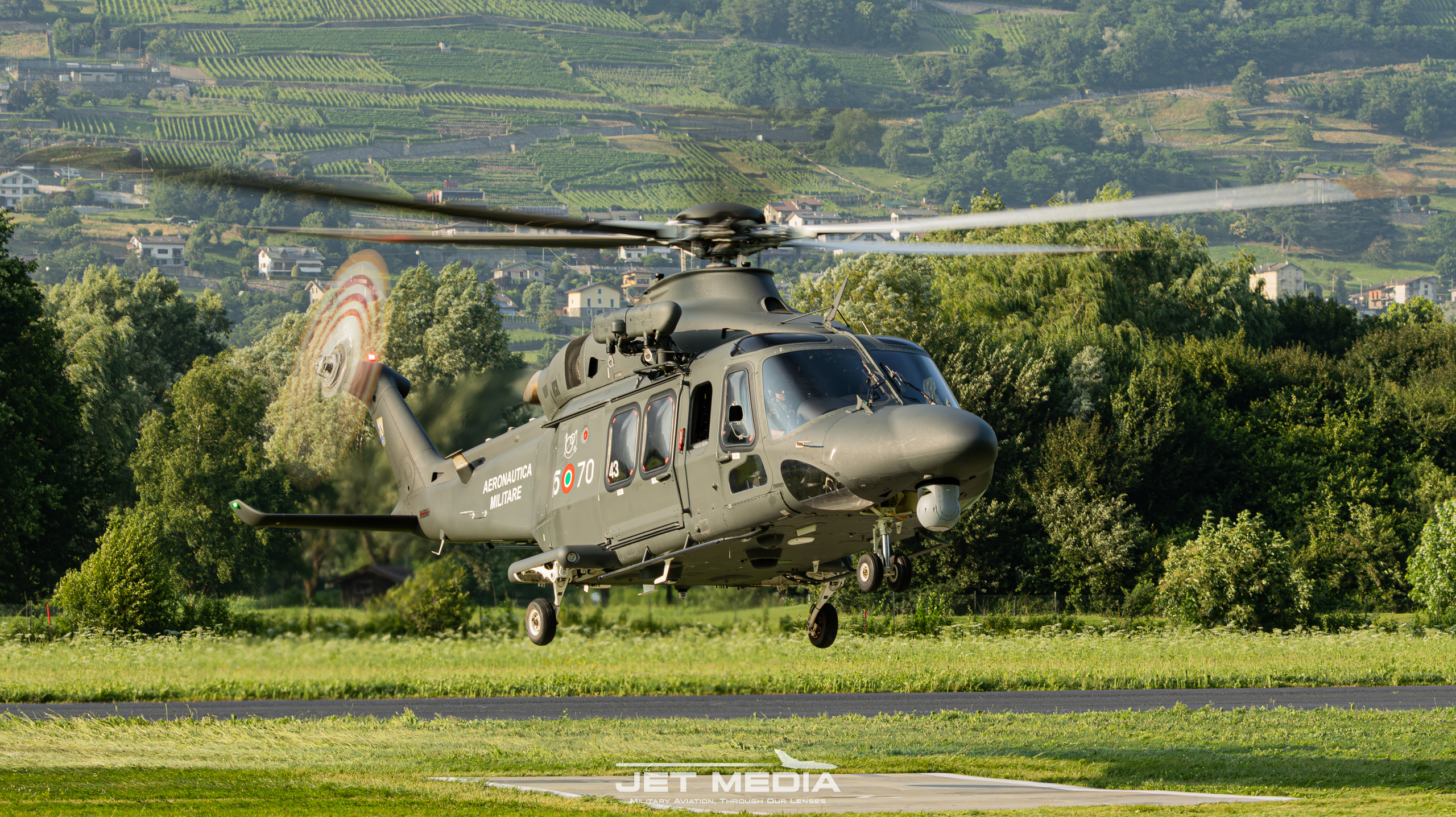
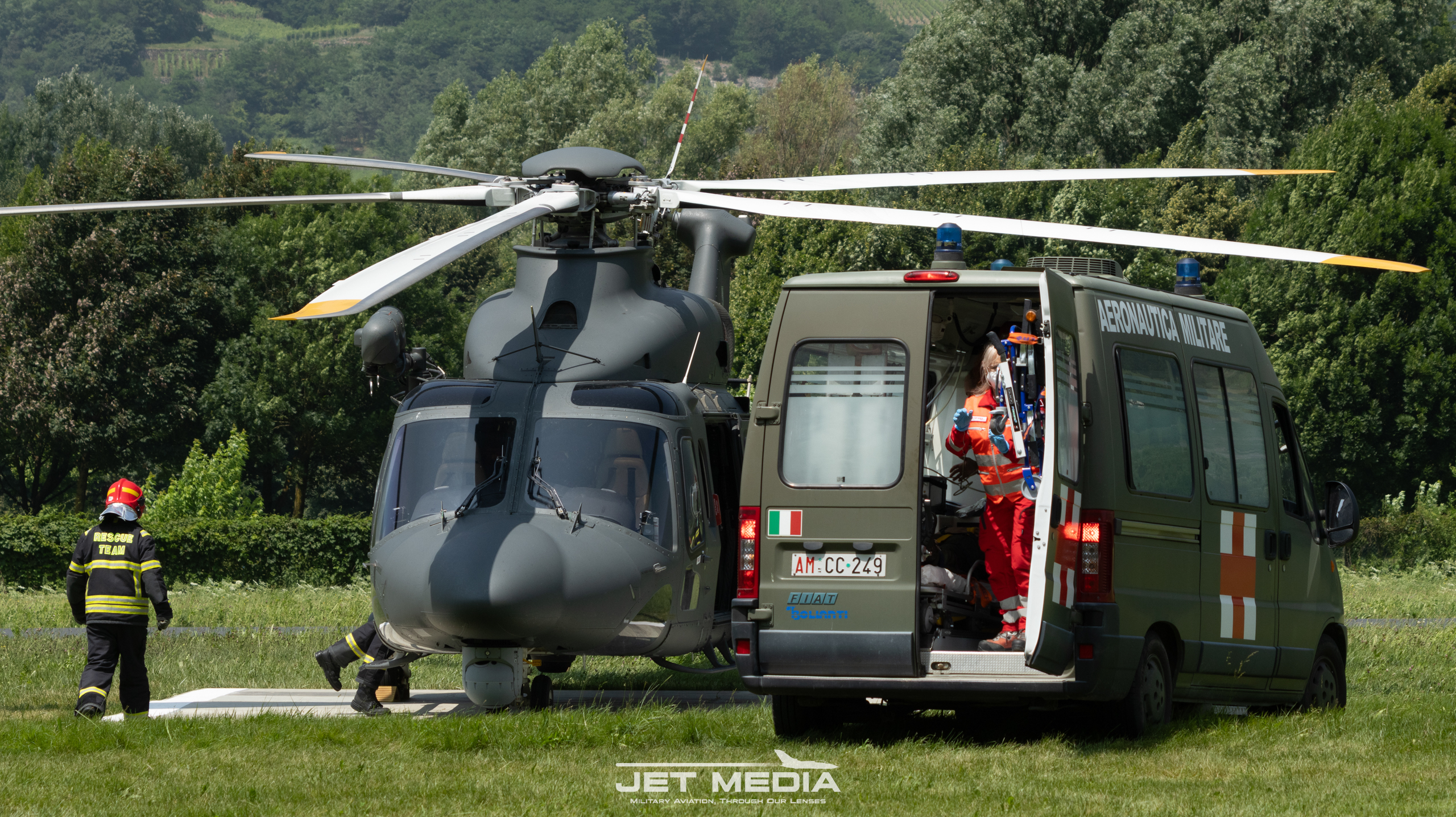
During the day, inside the airfield, we also had the opportunity to observe emergency tests on board a helicopter, carried out jointly by the Italian Air Force, with an HH-139, and the Italian Red Cross, through its Sondrio and Morbegno committees. Doctors and nurses worked with their instruments and equipment inside the cabin, checking how an emergency can be managed on board.
The officer in charge of the operations told us that, more than training, the exercise was used to understand how the whole emergency machine works: setting up a camp of this kind in a short time and managing everything once it is running.
Eight aircraft took part in the flying activity, from the Italian armed forces and police corps and from the Spanish and Swiss air forces:


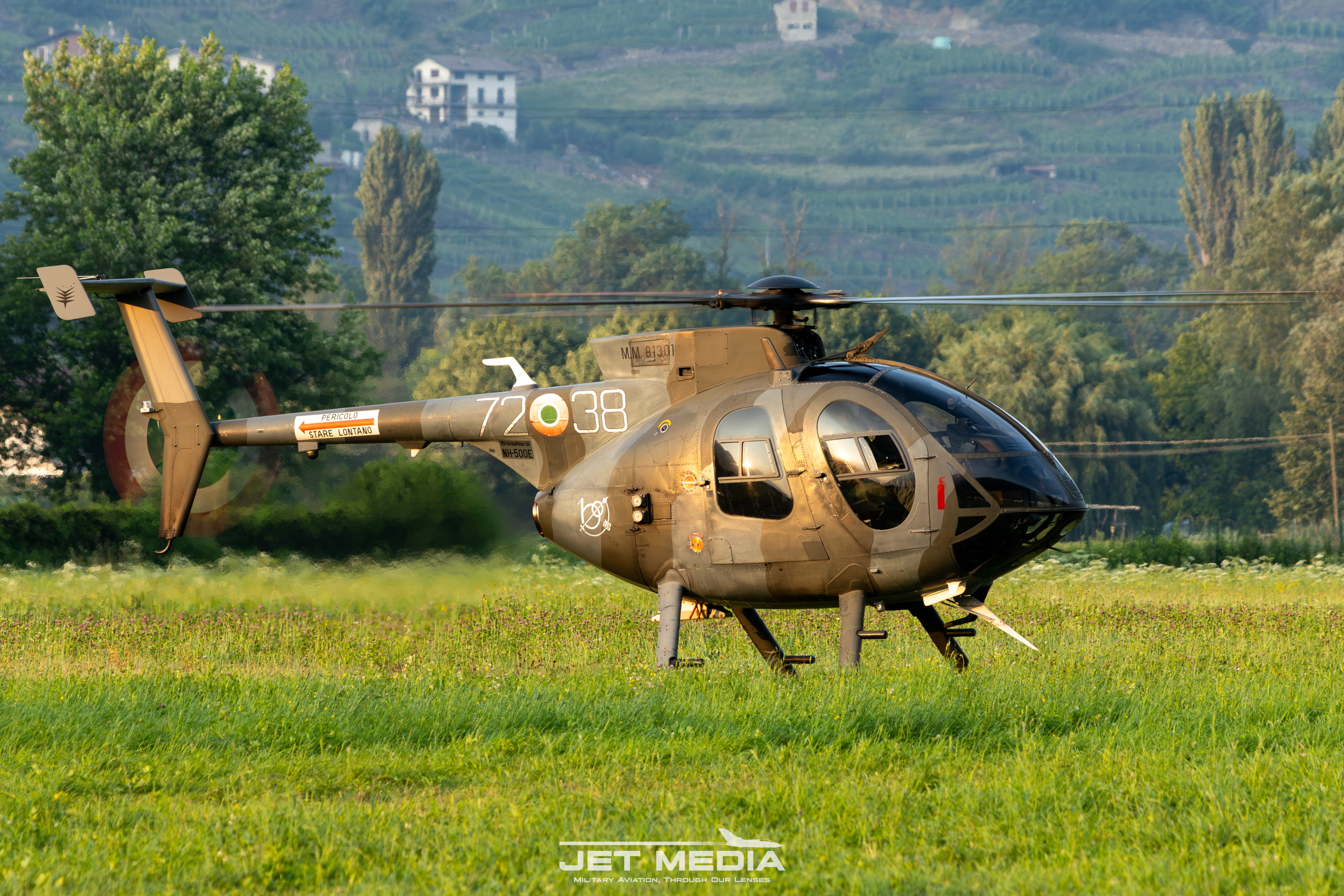
72° Stormo
NH-500E
Frosinone (IT)



Behind a list of designations there are very different machines, each with its own job. Here is a quick guide to the ones that flew at Caiolo.
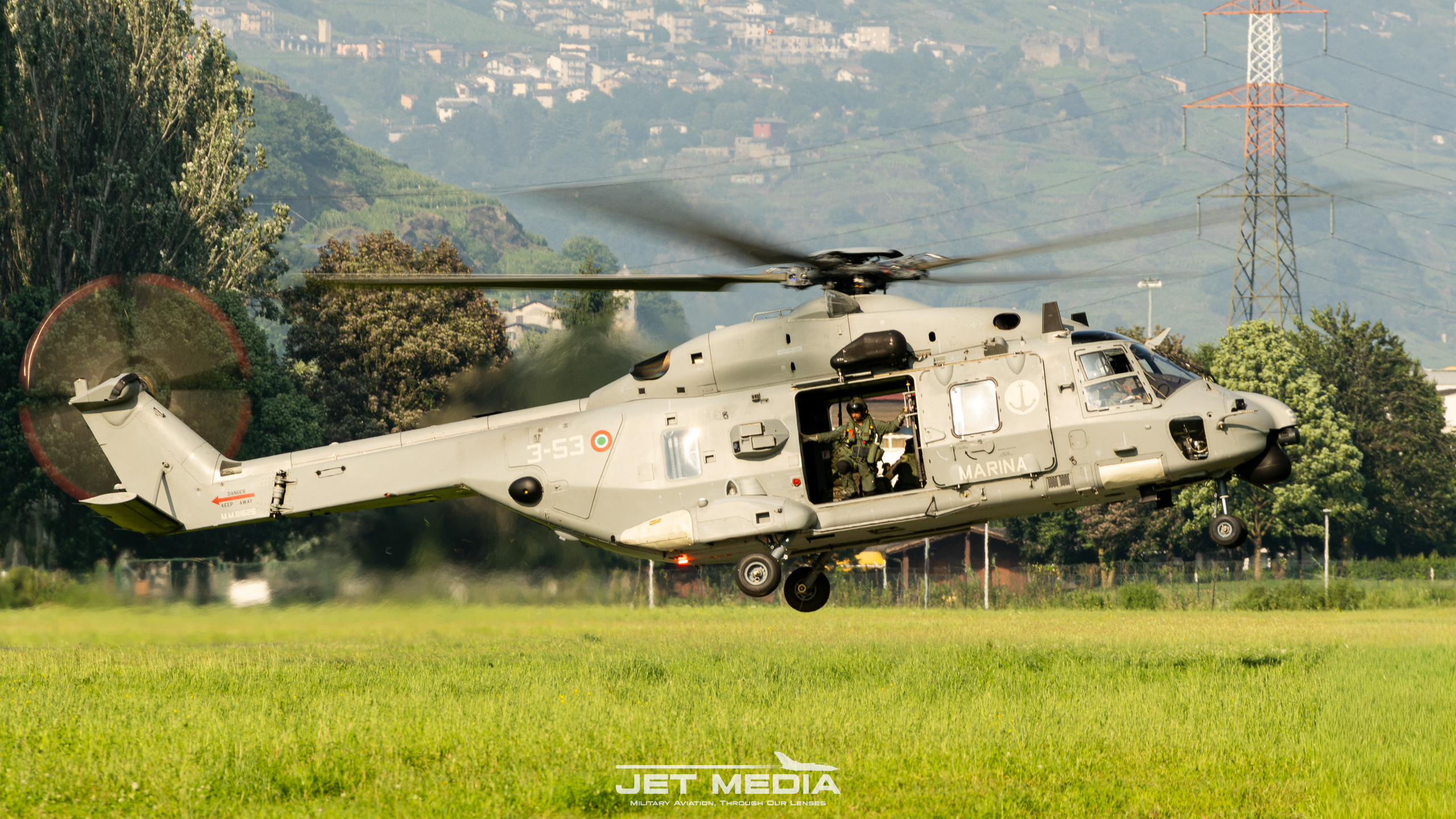
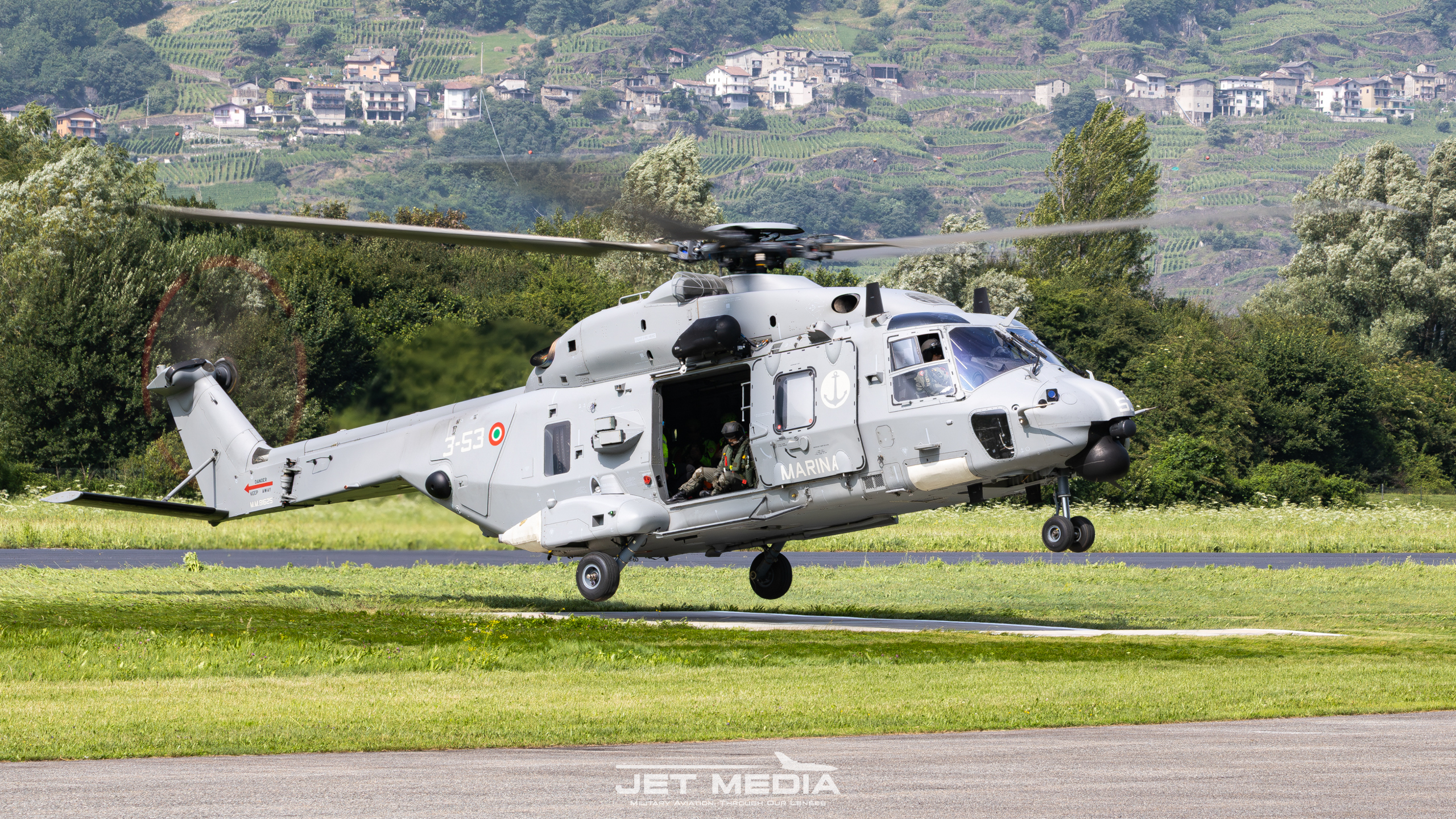
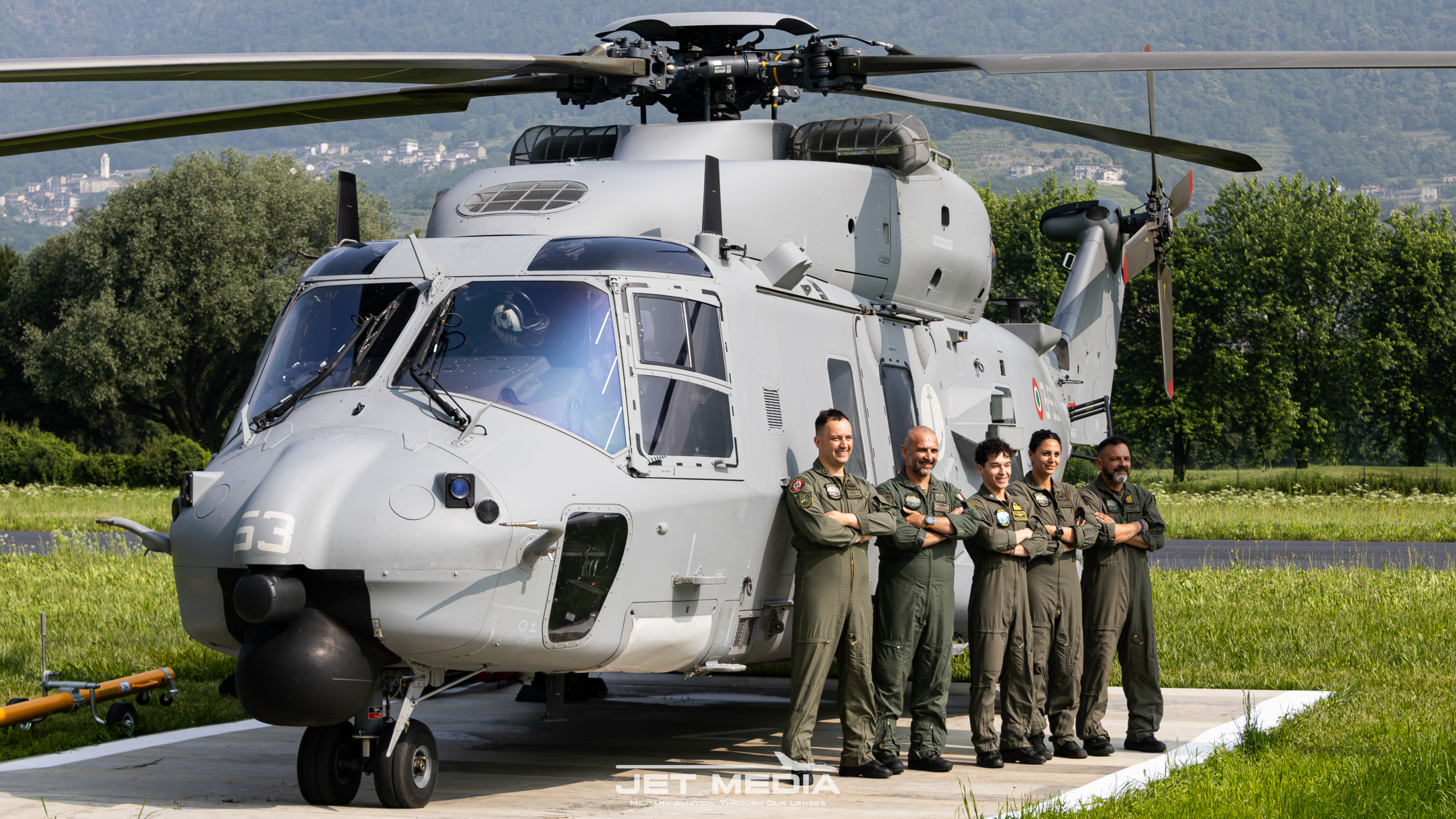
MH-90A · Italian NavyTactical transport
The Navy sent an MH-90A, the tactical transport version of the NH90, the twin-engine helicopter built by the NHIndustries consortium. In Italian Navy service the anti-submarine and anti-surface version is designated SH-90A, while the transport one is the MH-90A. The NH90 can carry up to twenty troops or twelve stretchers, is powered by two General Electric T700 turboshafts and has a top speed of around 300 km/h.
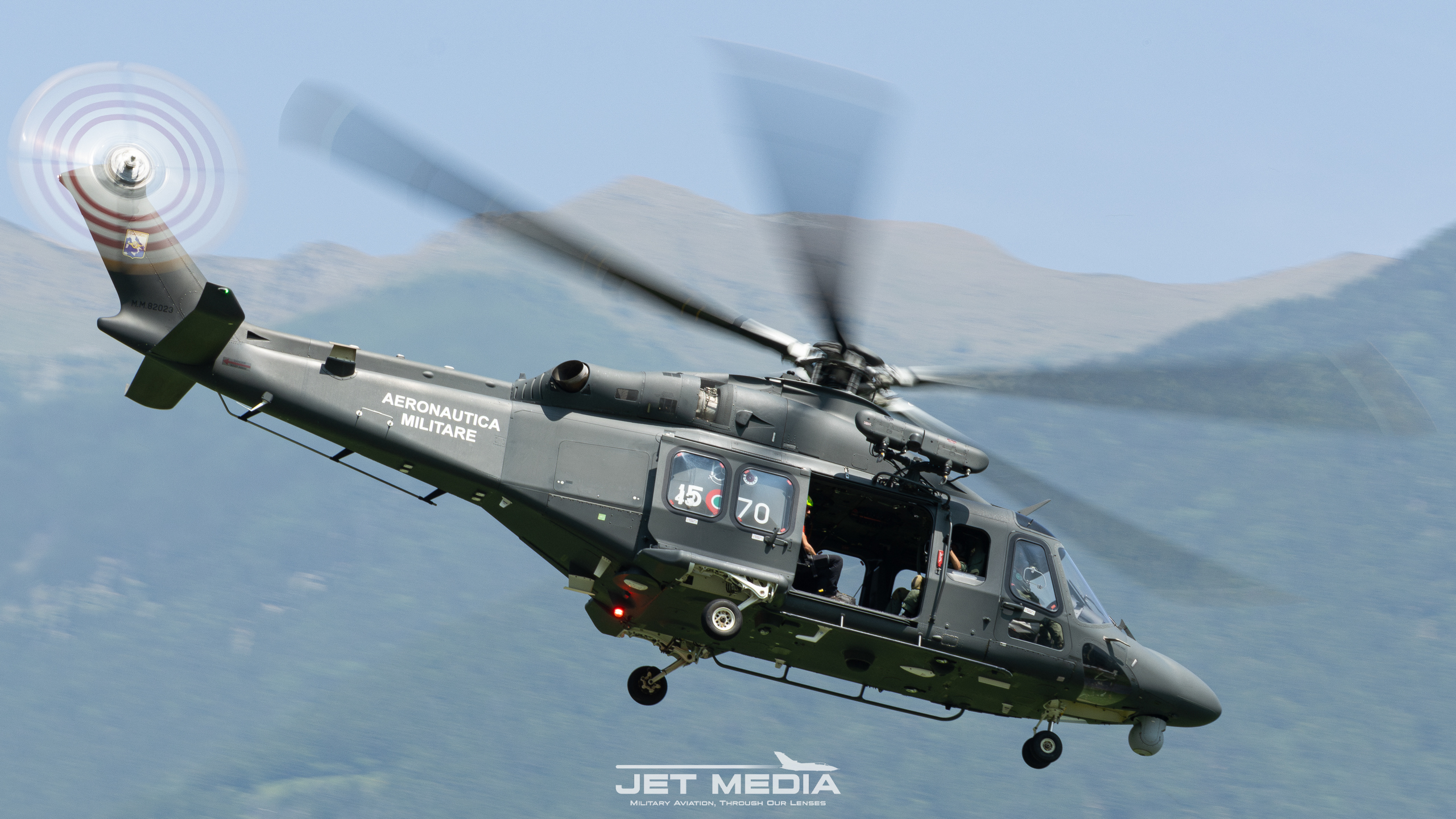
HH-139B · Italian Air Force, 15° StormoSearch and rescue
The 15° Stormo of Cervia is the home of the Air Force's search and rescue, and the HH-139B is its most modern tool. It is the SAR version of the Leonardo AW139 and joined the fleet in 2021. Compared with the earlier HH-139A it has a double hoist, a mission console that lets the crew manage the on-board equipment during a rescue, and updated avionics and sensors.
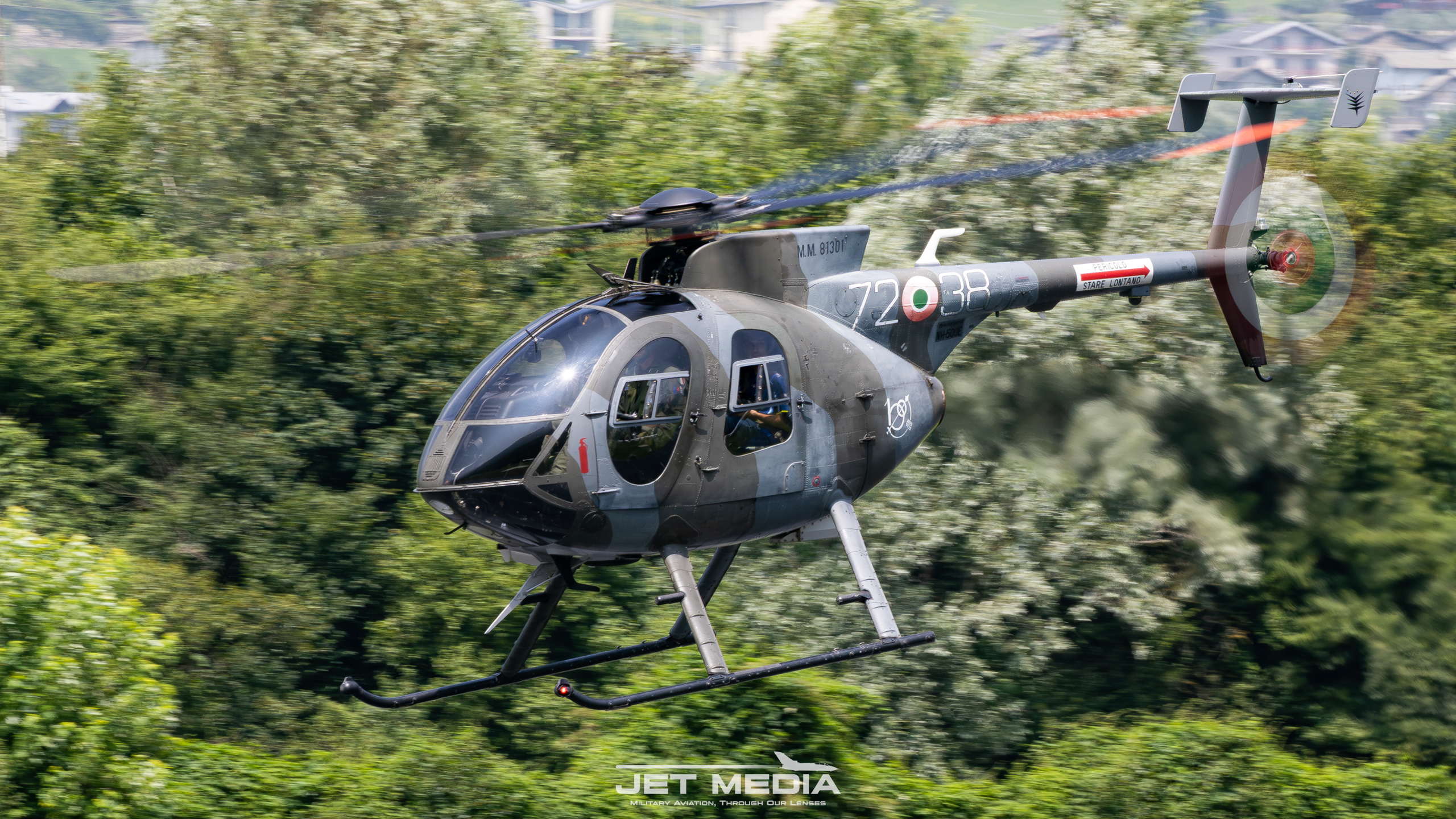
NH-500E · Italian Air Force, 72° StormoTraining
A light single-engine helicopter derived from the American Hughes 500 and built in Italy by Breda Nardi. In the Air Force it is flown by the 72° Stormo of Frosinone, the helicopter flying school, where pilots begin their rotary-wing training before moving on to bigger types such as the HH-139.
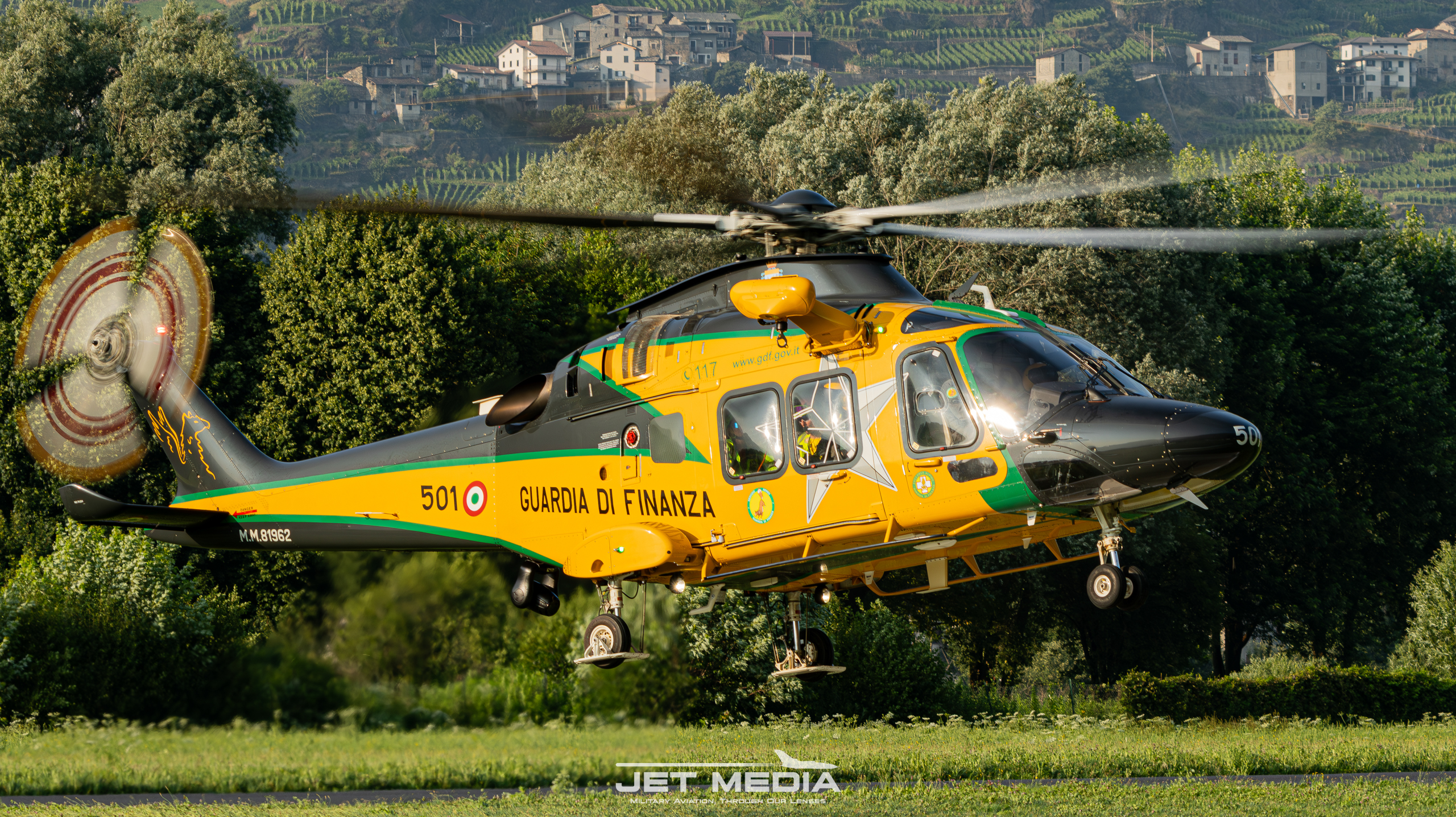
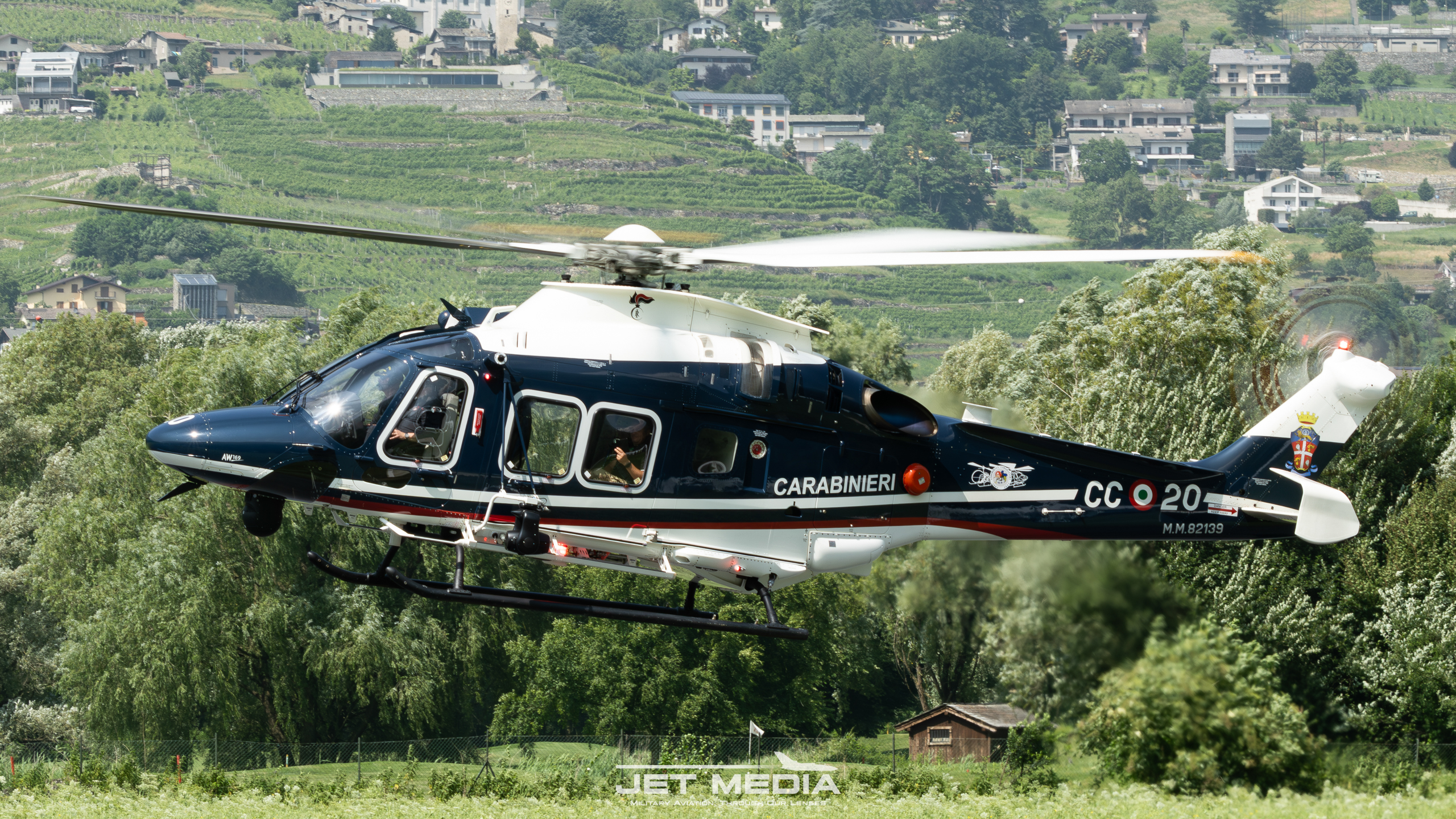
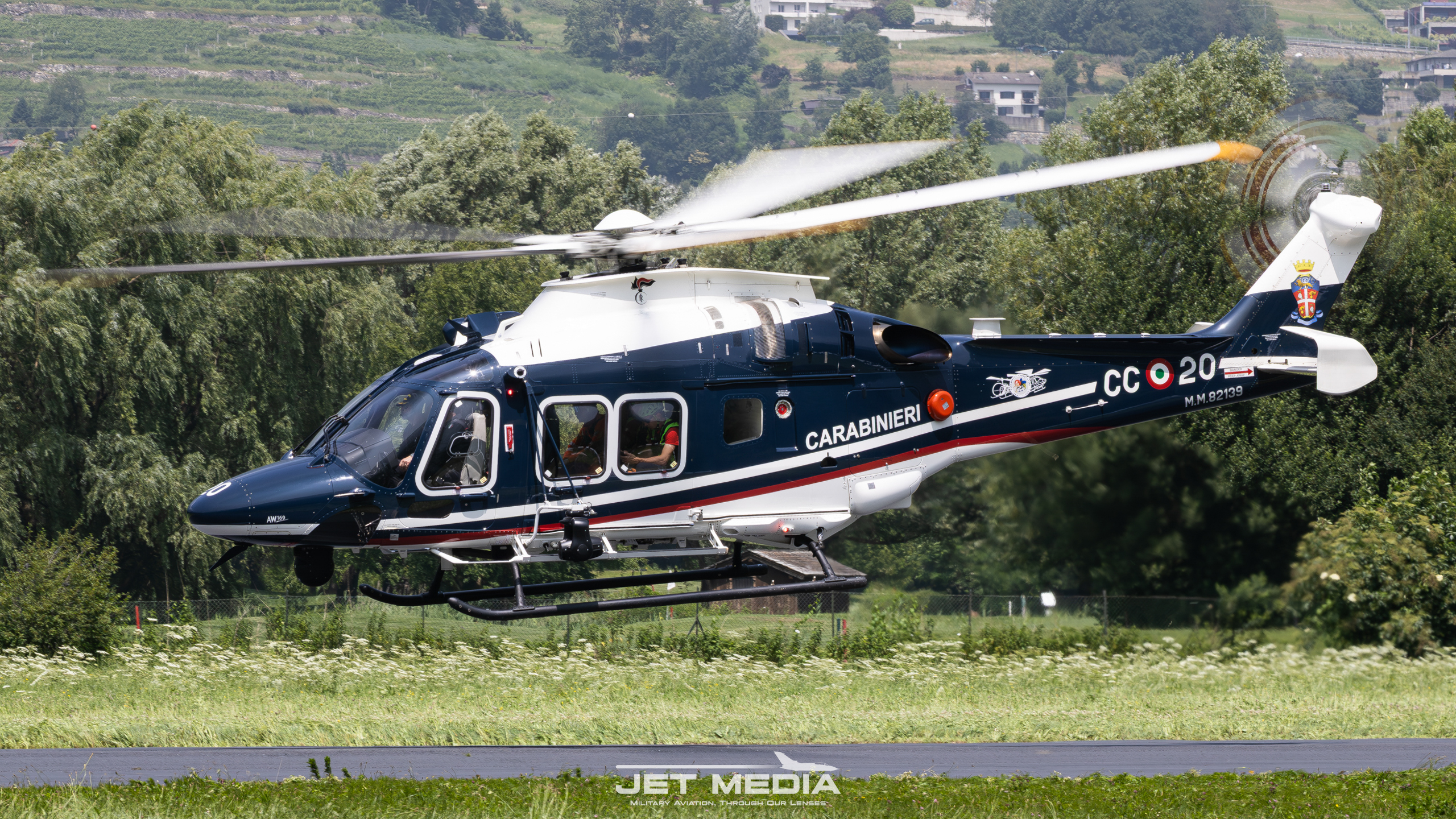
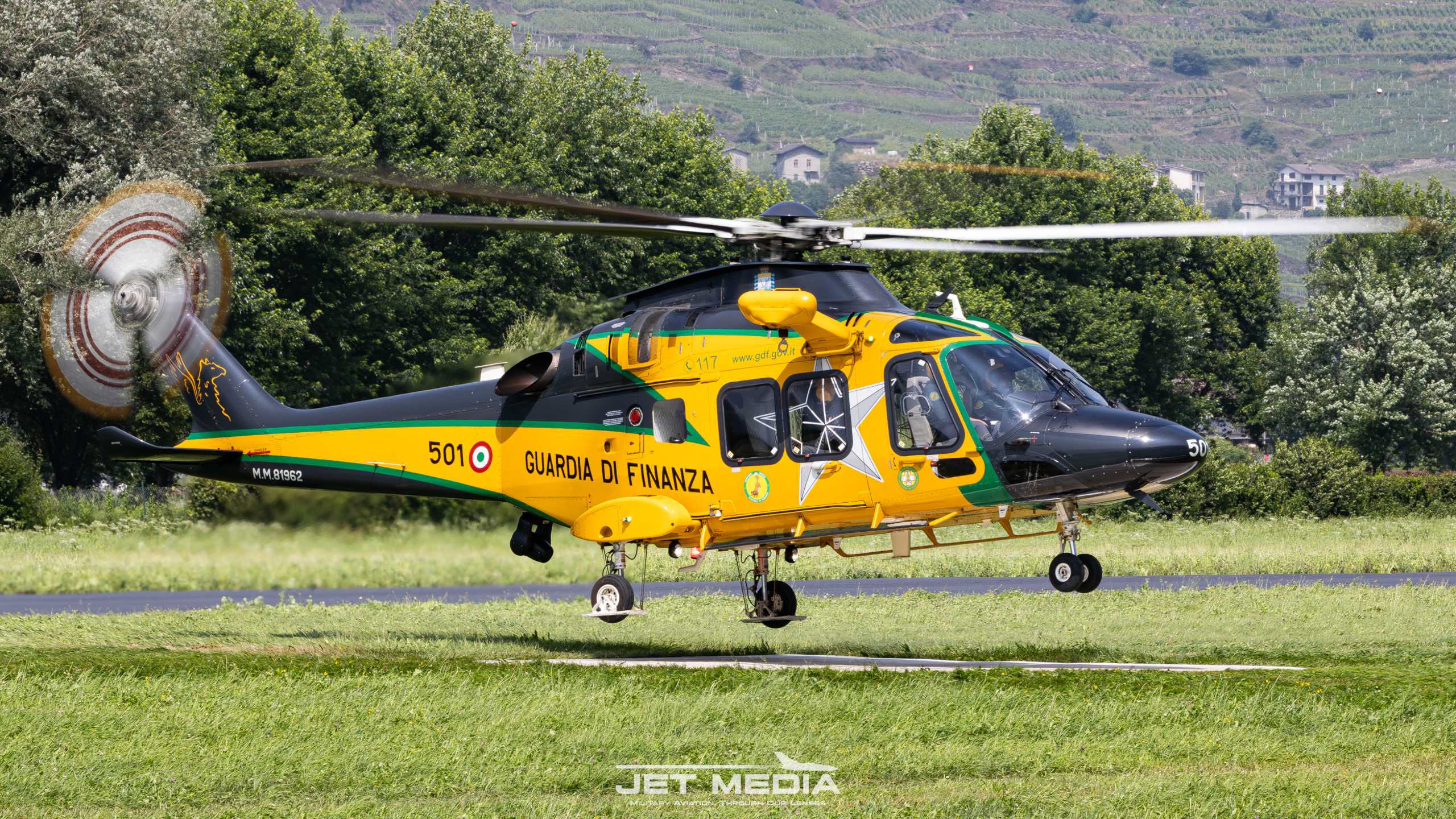
UH-169A & UH-169C · Guardia di Finanza and CarabinieriTwin-engine · AW169
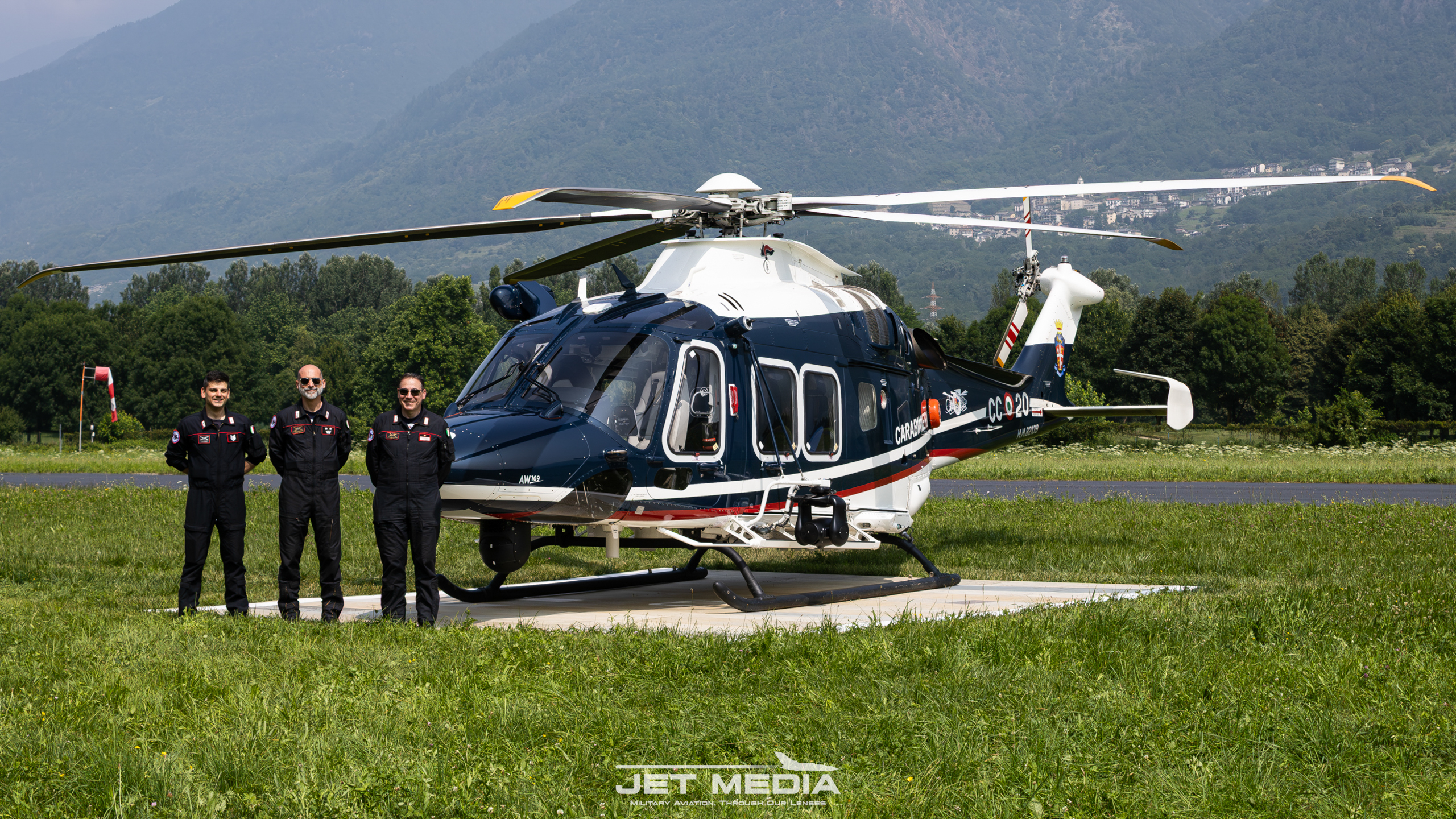
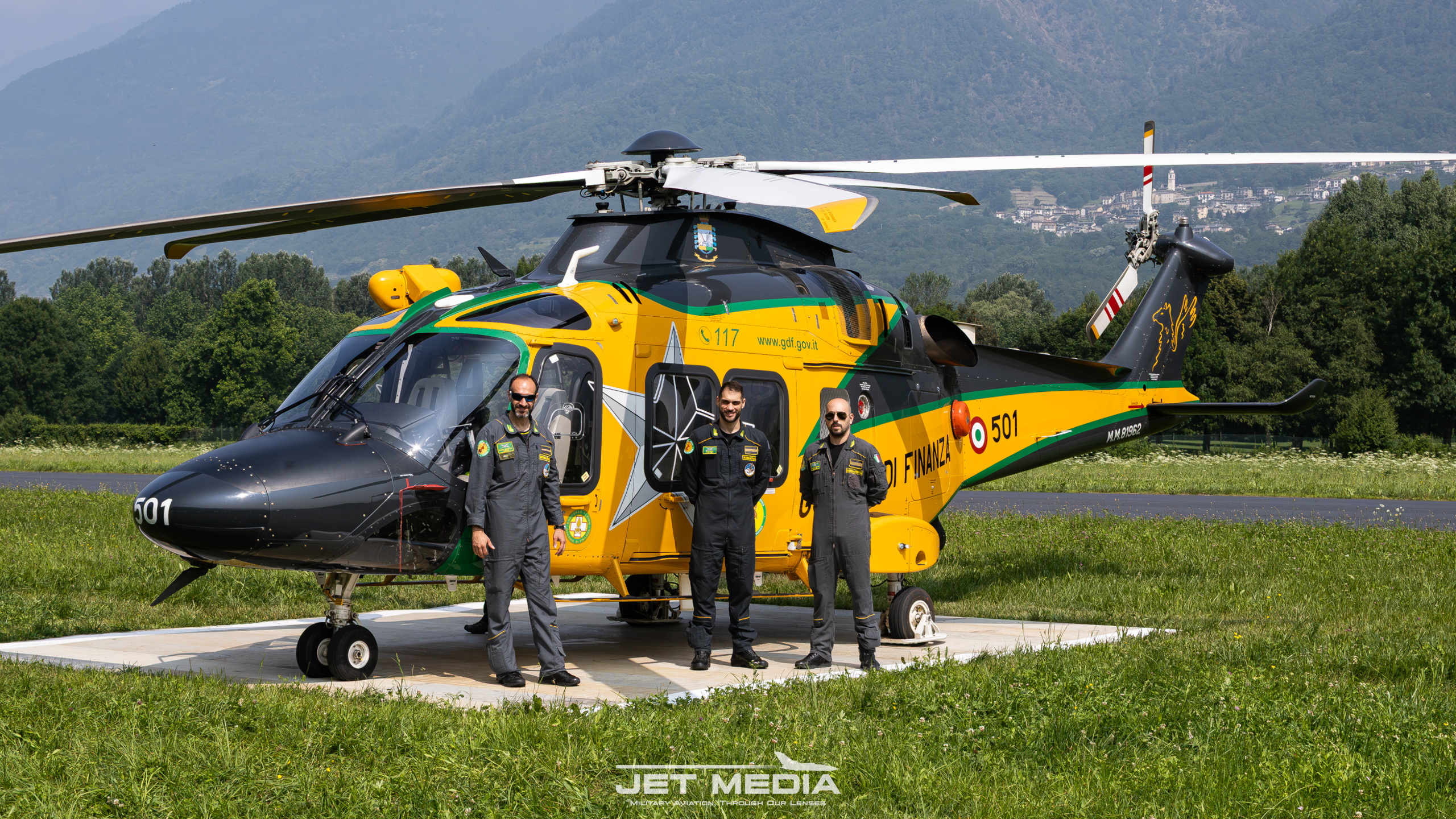
Both are military versions of the Leonardo AW169, a modern twin-engine helicopter in the five-tonne class. The UH-169A flies with the Air Sections of the Guardia di Finanza, here the one at Varese, and the UH-169C with the Carabinieri, here the 3° Nucleo Elicotteri of Bolzano. Both units regularly work in the Alps.
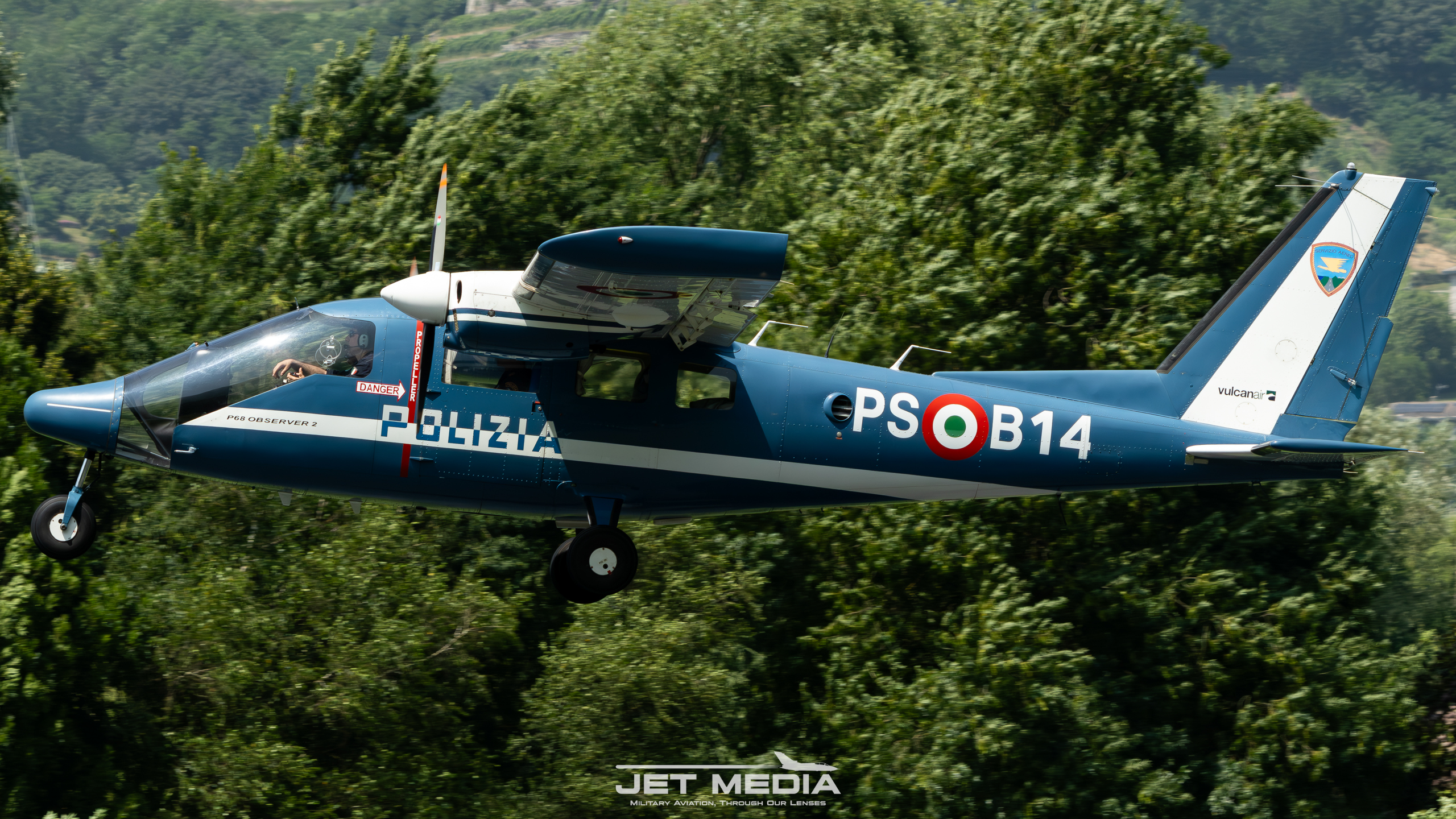
P-68 · Polizia di StatoObservation · fixed-wing
The only fixed-wing aircraft among the participants. The Partenavia P.68 Observer is a light twin-engine aircraft designed for observation, with a glazed nose that gives the crew a wide view, and the State Police Flight Unit at Milan Malpensa has long flown it for surveillance and overflight tasks.
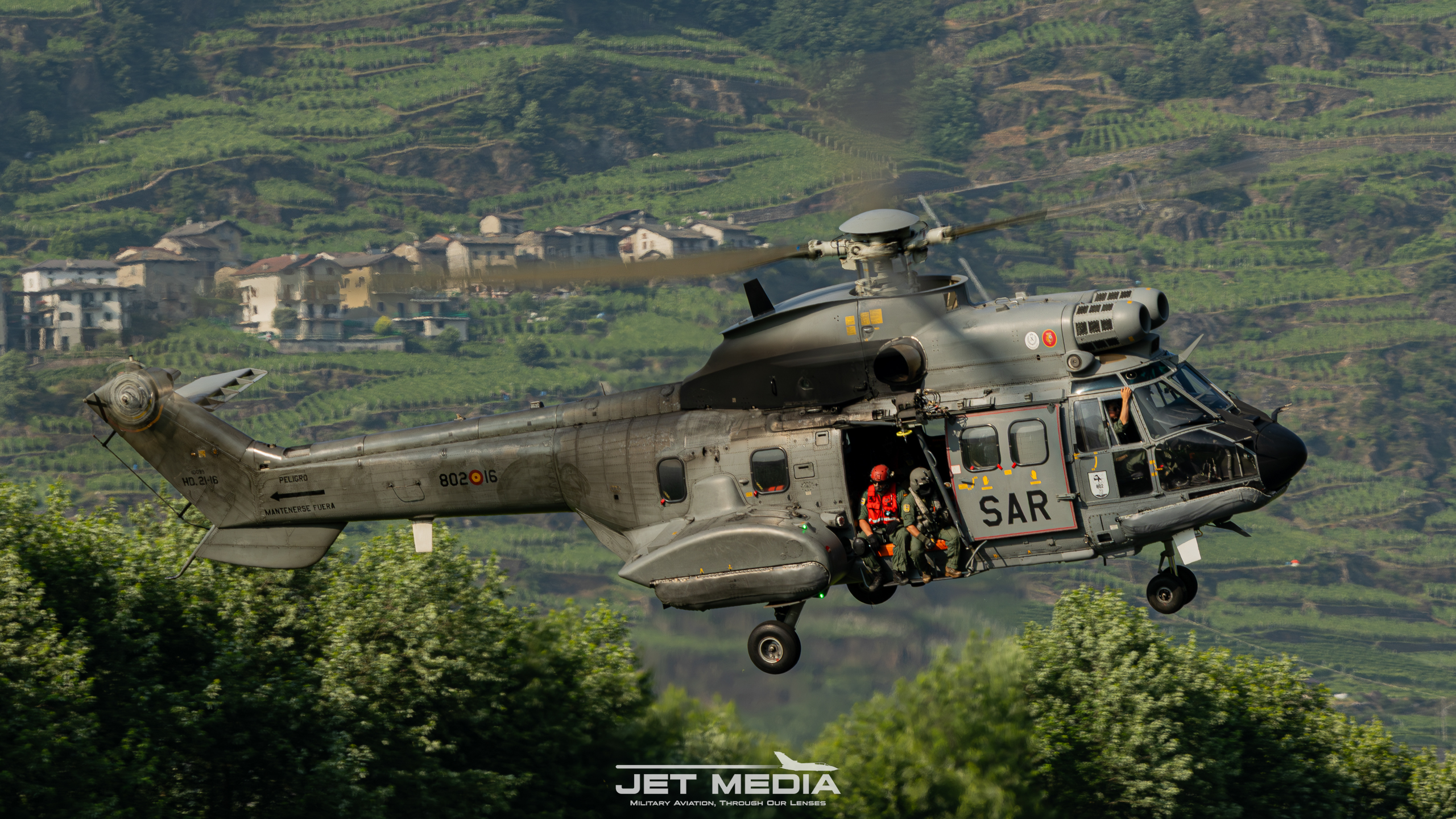
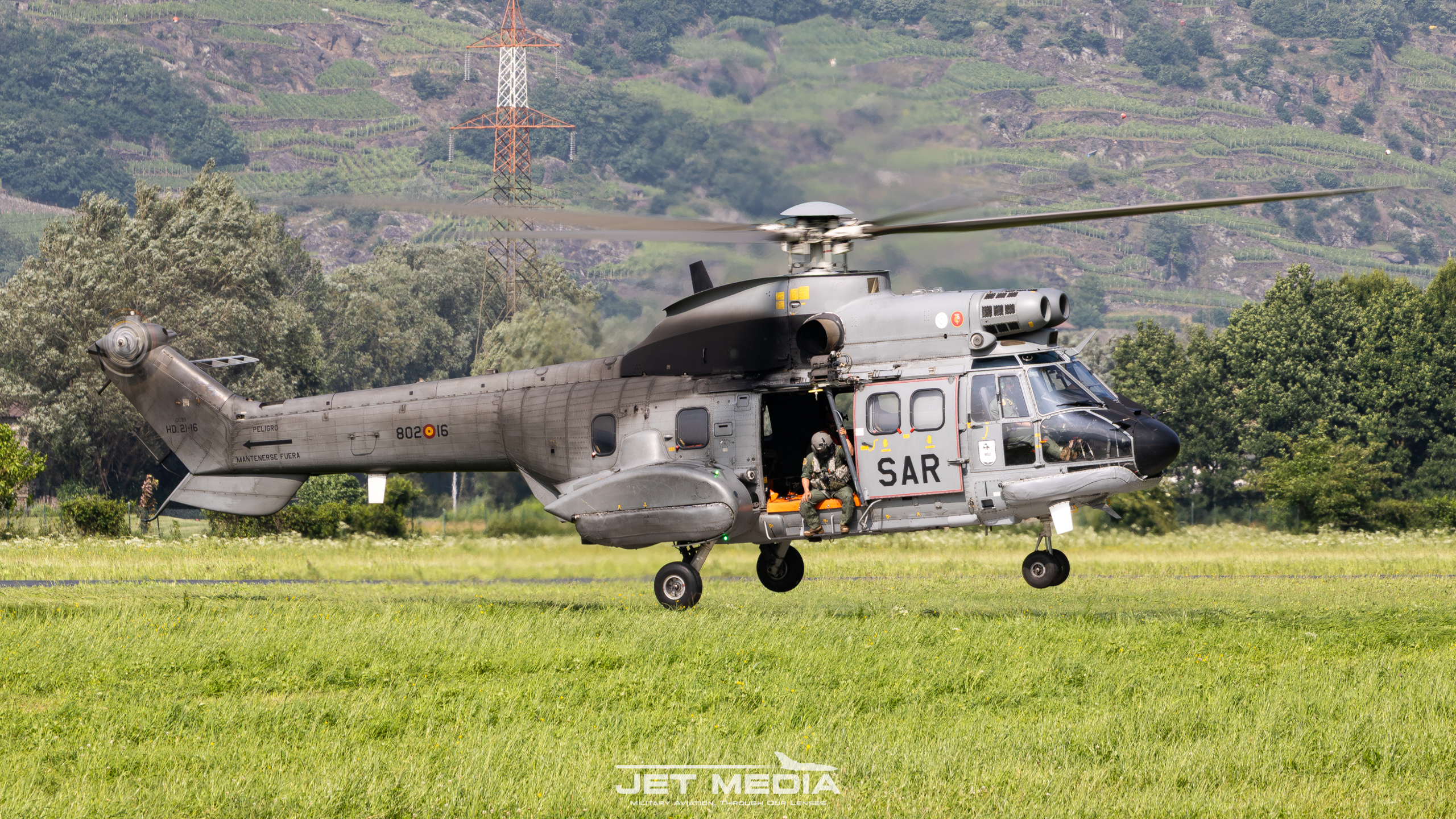
H215 · Spanish Air ForceHeavy · twin-turbine
The H215 is a modernised version of the Super Puma, a heavy twin-turbine helicopter built by Airbus Helicopters. The Spanish Air Force, the Ejército del Aire y del Espacio, has been receiving H215s to strengthen its search and rescue fleet.
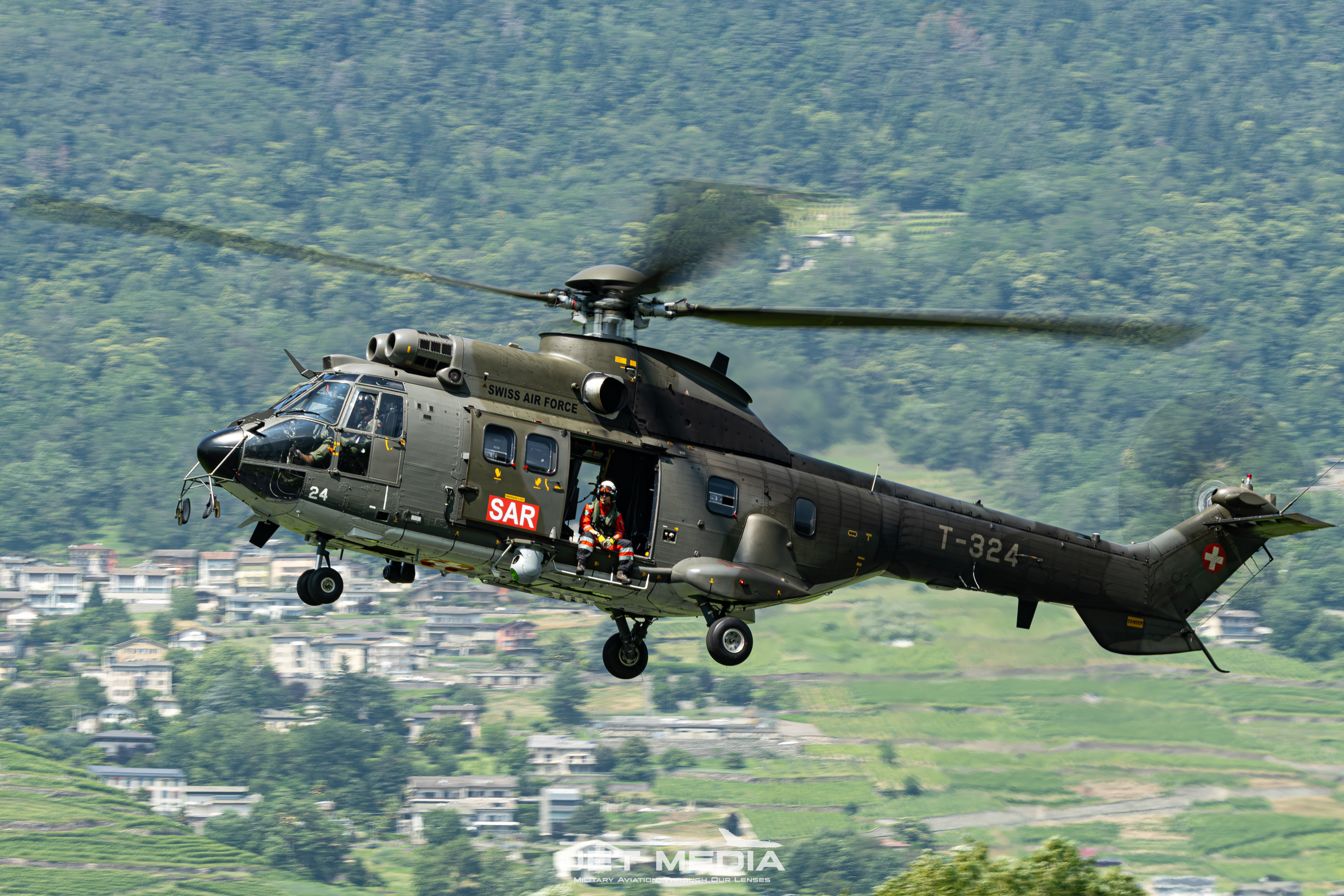
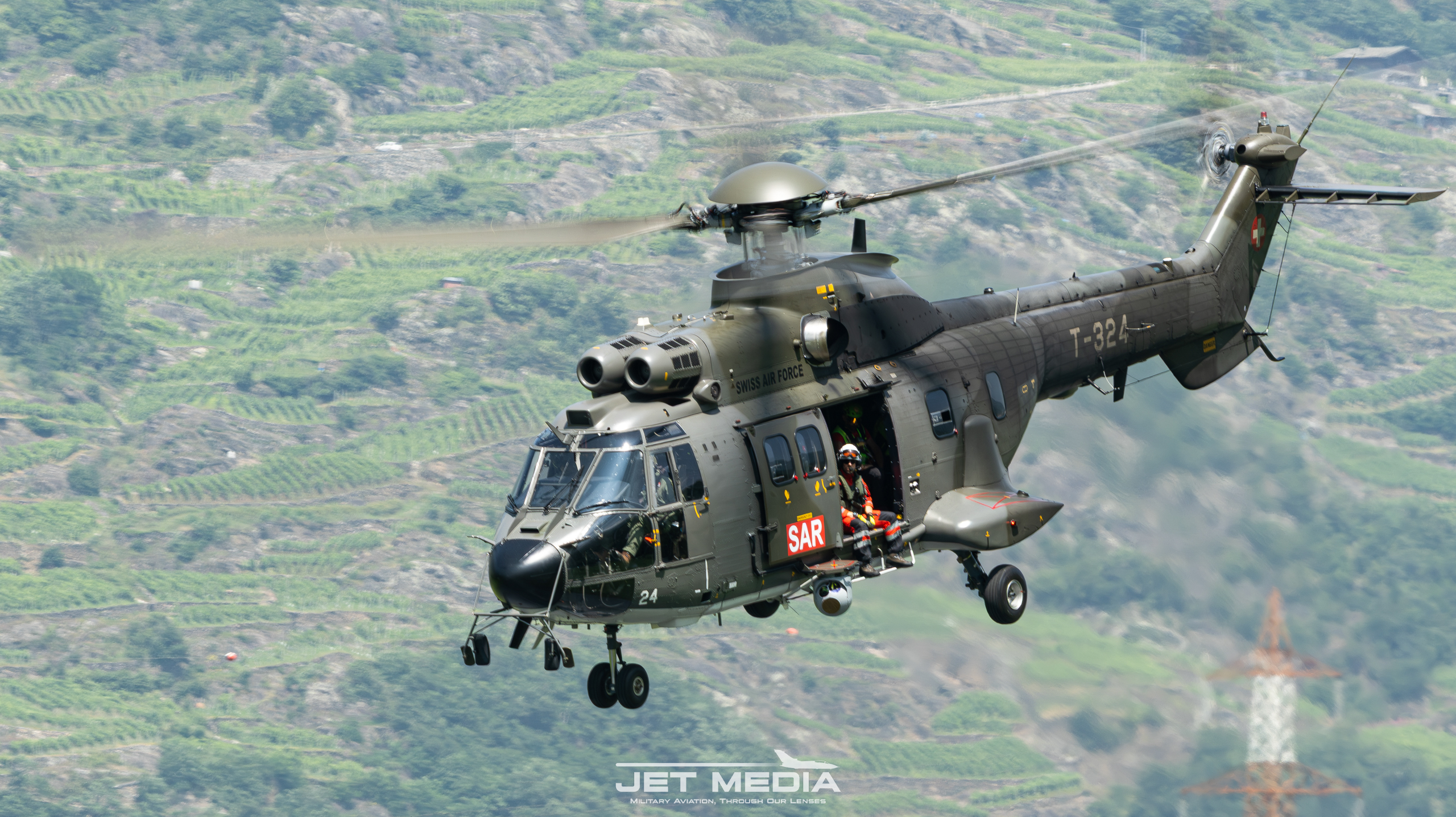
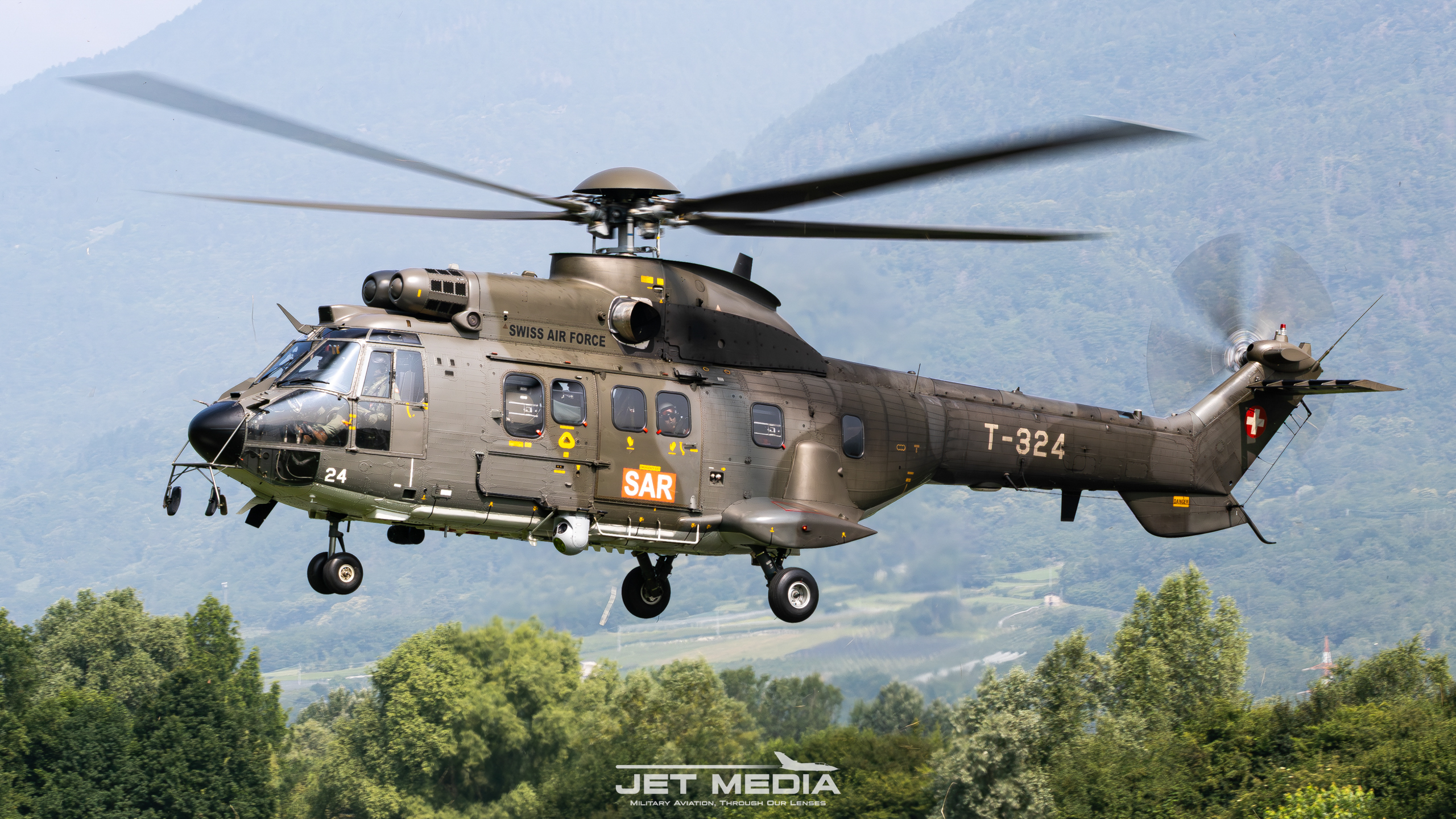
AS332 M1 Super Puma · Swiss Air ForceHeavy transport
The Swiss Air Force came with the AS332 M1 Super Puma, a heavy twin-turbine transport helicopter and the backbone of its helicopter lift in the Alps. The Swiss fleet was modernised by RUAG, with the upgraded aircraft back in service between 2012 and 2014, and some of them carry a FLIR sensor for search and rescue and surveillance.
Grifone 2025 showed what happens when many different organisations accept to train as one. In a real mountain emergency the helicopter that arrives first is not necessarily the one that belongs to the rescuer who needs it: Air Force, Navy, Carabinieri, Guardia di Finanza, State Police, the Red Cross and the Alpine Rescue all worked in the same place, with the same rules, and with the crews of two foreign air forces alongside them.
A huge Thank You goes out to the Italian Air Force and to everyone who made it possible for us to follow the exercise.
A selection of 27 images from the five days at Caiolo: the aircraft, the crews and the work on the ground and in the air. Click on any picture to open it full size.